
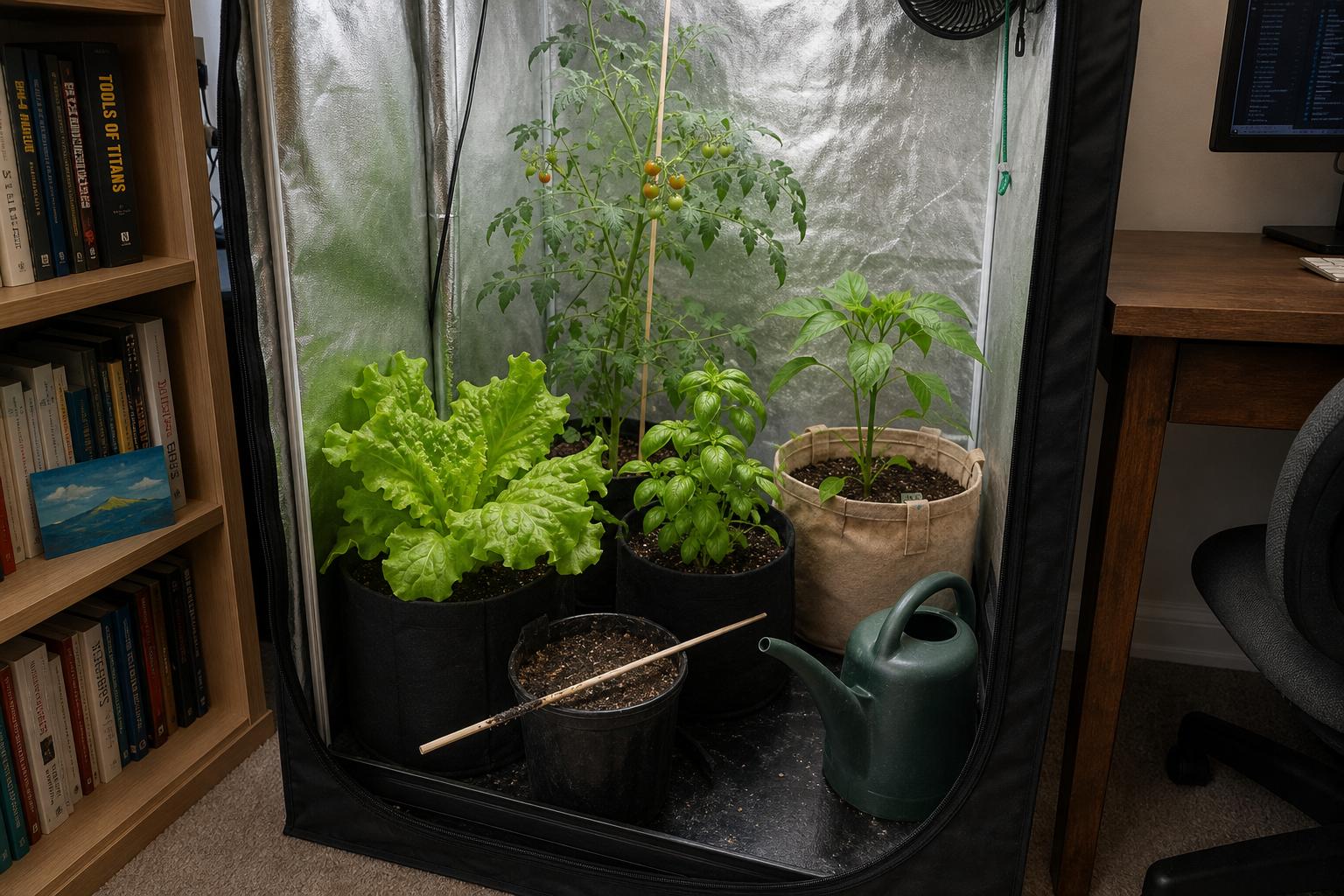
How often should you water vegetables in a grow tent? The honest answer is that your plants decide, not the calendar. A basil plant in a small fabric pot may need water much sooner than a young pepper in a larger plastic container, even when both sit in the same tent.
I used to water every container in my grow tent on the same schedule because it felt organized. It also left some plants thirsty and others sitting in wet growing medium. A reliable watering routine is based on observation, especially container weight, moisture at root depth, plant size, and current grow tent conditions.
Why a Fixed Watering Schedule Fails Inside a Grow Tent
A grow tent may be controlled, but it is not static. The lights warm the leaves and containers during the day. The exhaust fan removes moist air. Circulation fans speed evaporation from the growing medium. As plants develop more leaves and roots, they also use water faster.
This means a tomato that needed water every four days when young may eventually need it every day or two. Leaf lettuce in a shallow container can change just as quickly once its leaves fill the available space under the light.
Watering every Tuesday and Friday ignores what is happening inside the pot.
One mistake I see often is watering because the surface looks dry. The top layer inside a warm grow tent can dry while the lower half remains soaked. Adding more water at that point reduces oxygen around the roots and can encourage fungus gnats.
The opposite mistake happens too. A deep container may look damp near the top while an established pepper has already pulled much of the usable water from its root zone. Surface appearance alone is not enough.
How to Tell When Your Vegetables Actually Need Water
My preferred method is a combination of the container lift test and a moisture check below the surface. It is simple, costs nothing, and works during normal grow tent maintenance.
Learn the weight of a properly watered container
After watering a plant thoroughly and allowing excess water to drain, lift the container slightly. You do not need to pick it up completely. Just notice how much effort it takes to tilt or raise one edge.
Check it again over the next few days. The difference between a wet container and one approaching watering time becomes surprisingly obvious. I have noticed that this is more dependable than inexpensive moisture meters, which can give different readings depending on salts, soil texture, and where the probe lands.
For large containers that are difficult to lift inside a crowded grow tent, gently tip one edge or slide a hand under the rim. Avoid dragging a heavy pot across a waterproof tent floor, since trapped grit can damage the liner.
Check where the active roots are
Push a clean finger into the growing medium about two inches for small herb and lettuce containers. For deeper tomato or pepper pots, use a plain wooden skewer to check farther down. Leave it in briefly, then remove it.
- Dark medium clinging to the skewer usually means there is still useful moisture below.
- A nearly clean and dry skewer, combined with a light container, means it is probably time to water.
- A sour smell or heavy pot lasting many days suggests the root zone is staying too wet.
Seedling cells need a gentler approach because their roots occupy very little medium. Check them daily inside the grow tent, but add only enough water to moisten the small root area. Saturating an entire large container around a tiny seedling keeps unused medium wet for too long.
Use the plant as supporting evidence
Soft or drooping leaves can indicate thirst, but they can also appear when roots are waterlogged or when the grow tent becomes unusually warm. Check the growing medium before reacting to wilt.
A thirsty plant usually sits in a noticeably lighter container and improves after watering. A drooping plant in a heavy, wet container needs more time, more root zone oxygen, or better drainage, not another drink.
What Changes Watering Frequency in a Controlled Tent
Several conditions can shorten or extend the time between watering. Watch for these changes whenever your usual pattern suddenly stops working.
- Plant size: Mature tomatoes, cucumbers, peppers, and bush beans use far more water than seedlings. Large leafy canopies also release more moisture into the grow tent air.
- Container size: Small pots dry quickly and save floor space, but they demand more attention. Larger pots hold moisture longer and give roots a wider safety margin.
- Container material: Fabric pots lose water through their sides. Plastic pots dry more slowly and are often easier to manage in a small apartment grow tent.
- Light intensity: Brighter lights usually increase plant growth and water use. Containers near the brightest part of the tent may dry before those around the edges.
- Fan placement: A circulation fan blowing directly across a fabric pot can dry that container faster than its neighbors.
- Temperature and humidity: Warm, dry tent air increases water loss. Cooler or more humid conditions slow it down.
- Root condition: A root bound vegetable can use the small amount of remaining water very quickly. A recently transplanted plant may take much longer.
I prefer containers that are slightly larger than the minimum needed for the crop. They occupy more grow tent floor space, but they provide a useful buffer if I cannot check plants twice a day. Oversized containers are not automatically better, though. They cost more to fill, create heavier runoff trays, and can keep young root systems wet for too long.
Choose stability over maximum pot count.
A Simple Grow Tent Watering Routine
The easiest routine is to check plants at roughly the same point in the light cycle. I usually prefer shortly after the grow lights turn on. This gives me time to remove runoff and inspect the tent before warmth and plant demand increase.
- Look at each plant individually. Check leaf posture, but do not make the decision from leaves alone.
- Lift or tip the container. Compare its weight with the weight you remember after a thorough watering.
- Check moisture at root depth. Use a finger for shallow containers or a wooden skewer for deeper ones.
- Water slowly across the surface. Pause between pours so dry pockets can absorb water instead of sending it straight down the sides.
- Allow drainage. Empty saucers and runoff trays so containers do not sit in water inside the grow tent.
For established vegetables in well draining medium, I prefer watering thoroughly and then waiting until the root zone approaches the dry side of moist. Frequent little splashes tend to wet only the upper layer, encourage shallow roots, and make it difficult to judge how much water is actually available.
The exception is very young seedlings and newly transplanted herbs. Their small root systems cannot use a full container evenly, so targeted watering around the current root area is more practical.
If Your Pots Stay Wet for Too Long
If a container remains heavy for many days, do not automatically increase fan speed. More fan noise and electricity use may not solve compacted medium or poor drainage.
First, check that the drainage holes are open and the pot is not standing in runoff. Then consider whether the container is too large for the plant or whether the medium has collapsed and become dense. Inside a grow tent, consistently wet pots combined with fungus gnats, slow growth, or yellow lower leaves usually point to a root zone problem rather than a need for stronger light.
At your next grow tent check, fully water one healthy container, let it drain, and learn its weight. Compare it each day until the medium is approaching dry at root depth. That simple weight reference is the most practical watering schedule you can create, because it adjusts naturally as your vegetables grow and your tent conditions change.


