
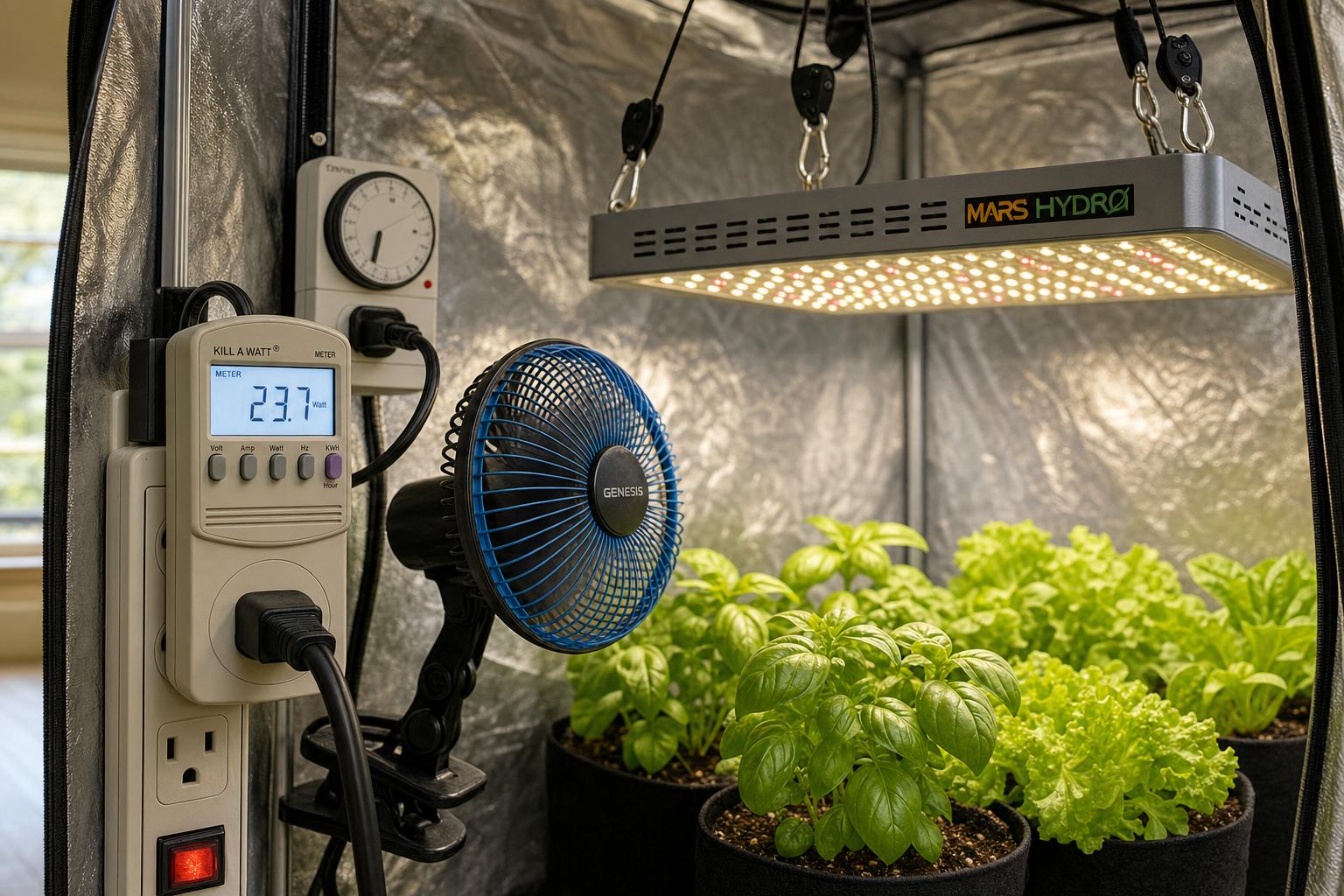
Running a grow tent long term means one thing becomes obvious very quickly. Electricity is your biggest ongoing expense. Lights, exhaust fans, oscillating fans, dehumidifiers, and sometimes a portable AC all stack up. The goal is not to cut power blindly inside a grow tent. The goal is to use power intelligently so the environment stays stable without running everything at full blast.
After years of dialing in different grow tents, I have noticed that most high electricity bills are not caused by one large mistake. They come from small inefficiencies that compound over every hour of every day. The good news is that you can lower power usage meaningfully without slowing growth or reducing yield. You just need to rebalance the system.
Where Most Grow Tent Power Actually Goes
Before adjusting anything in your grow tent, it helps to understand where electricity is really being used.
- Grow lights are usually the largest draw
- Inline exhaust fans run nearly constantly
- Dehumidifiers and AC units spike consumption dramatically when oversized or poorly timed
- Circulation fans add up when running at maximum speed 24 hours a day
What surprised me most when I started tracking wattage with a plug in meter was how often support equipment used more energy than necessary. In one of my earlier grow tents, the dehumidifier was running harder than the light during late flower because my exhaust system was not balanced properly. I was paying to condition air that I was immediately exhausting.
That was a system design problem, not a plant problem.
Small Equipment Adjustments That Cut Consumption Immediately
1. Stop Running Exhaust at 100 Percent by Default
One mistake I see often is growers installing a powerful inline fan inside a grow tent and running it at full speed all the time. More airflow feels safer. In reality, it wastes energy and destabilizes the environment.
Inside a sealed grow tent, you only need enough exhaust to control heat and humidity while maintaining slight negative pressure. Use a fan speed controller and dial it back slowly while watching temperature and humidity curves. In my experience, most tents can run at 50 to 70 percent fan speed once the environment is stable.
Lower fan speed means less heat loss, which also means your heater or AC does not need to run as often. That reduces total system load.
2. Match Light Intensity to Plant Stage, Not to Maximum Output
Modern LED fixtures inside a grow tent often run far more power than the plants need. I learned this after running a fixture at 100 percent through early veg simply because it was available.
Instead of blasting full intensity, dim your light and keep it closer to the canopy. You will achieve the same effective light levels with less power. Use a PAR meter if possible. Even without one, gradual dimming while monitoring plant response works well inside a controlled grow tent.
The tradeoff is this. Slightly higher intensity can reduce flowering time by a few days in some cases. But that marginal gain rarely justifies consistently higher electricity costs.
I prefer optimizing efficiency instead of chasing theoretical maximum output.
3. Coordinate Light and Climate Equipment Timing
In a grow tent, lights generate heat. That heat can be either a problem or an asset.
If your ambient room is cooler at night, run your grow tent lights during the colder period of the day. This reduces heater demand. I eventually realized I was heating a room all night and cooling it all day simply because my light schedule was inverted out of habit.
Aligning your light cycle with the coolest part of the day reduces total HVAC strain significantly.
Balancing Airflow and Lighting for Efficiency Instead of Excess
Efficiency inside a grow tent is about balance. Too much airflow wastes conditioned air. Too little traps heat and drives up cooling demand.
Dial In Negative Pressure Correctly
Your grow tent walls should gently pull inward. If they are collapsing aggressively, your exhaust is too strong. That means you are removing air faster than necessary and forcing your climate devices to work harder.
Open passive intake flaps slightly more before increasing fan speed. More unrestricted intake reduces the workload on the fan motor and stabilizes internal pressure.
Optimize Internal Air Circulation
Oscillating fans inside a grow tent are often run at maximum speed. This is rarely needed. The goal is consistent leaf movement, not turbulence.
Reduce fan speed until leaves gently move without constant whipping. This lowers power draw and reduces plant stress. I have noticed better structural growth with steady moderate airflow rather than aggressive wind.
Reflectivity Matters More Than Adding Wattage
If your grow tent interior is clean and reflective, you can sometimes lower light intensity without losing performance. Dust and residue reduce reflectivity over time.
I clean my grow tent walls and light lenses between cycles. It sounds minor, but improved light bounce allows slightly lower dimmer settings while maintaining canopy coverage.
A Practical Weekly Efficiency Checklist for Grow Tents
This is the routine I run once a week in each grow tent.
Checkpoint 1: Measure Real Power Usage
Use a watt meter and check actual draw from:
- Lighting fixture at current dimmer setting
- Inline fan at current speed
- Dehumidifier or AC during active cycle
Do not rely on manufacturer maximum ratings. Real world draw is often different.
Checkpoint 2: Evaluate Run Times
Check how long your high draw equipment actually runs inside the grow tent.
- Is the dehumidifier cycling constantly
- Is the exhaust fan running harder during lights on than necessary
- Is the heater activating during lights on when lighting heat should cover the load
If something runs nearly nonstop, ask why. It often signals imbalance.
Checkpoint 3: Adjust Before Adding Equipment
Many growers respond to high humidity or heat in a grow tent by adding another device. I prefer adjusting existing settings first.
Lower light intensity slightly and increase fixture height before buying a larger AC. Reduce watering volume inside the grow tent before upgrading to a stronger dehumidifier. Balance airflow before assuming equipment is undersized.
Troubleshooting: Why Is My Power Bill Still High?
If Your Dehumidifier Runs Constantly
You may be exhausting conditioned air too aggressively. Slow the exhaust fan and allow humidity to stabilize. Also check for unsealed duct leaks around the grow tent. Pulling in moist ambient air forces continuous removal.
If Heat Is Spiking Despite High Exhaust
Your lighting intensity may simply exceed the cooling capacity of your tent volume. Dimming the light slightly often lowers total system demand more effectively than increasing fan speed.
If Equipment Feels Hot to the Touch
Poor airflow around drivers and controllers inside a grow tent can reduce electrical efficiency. Mount LED drivers outside the tent when possible. I started doing this years ago and saw both lower internal temperatures and slightly reduced cooling demand.
The Approach I Recommend
If I had to choose one philosophy for reducing power in a grow tent, it would be this: optimize balance before increasing output.
Running everything harder rarely creates better results. A well balanced grow tent with moderated light intensity, controlled exhaust speed, and coordinated timing will often match the yield of an aggressively powered setup while using noticeably less electricity.
In my experience, stability grows better plants than raw intensity. And stability usually requires less power than people think.
Once you view your grow tent as a closed system where every piece affects every other piece, cutting energy use becomes less about sacrifice and more about precision.


