
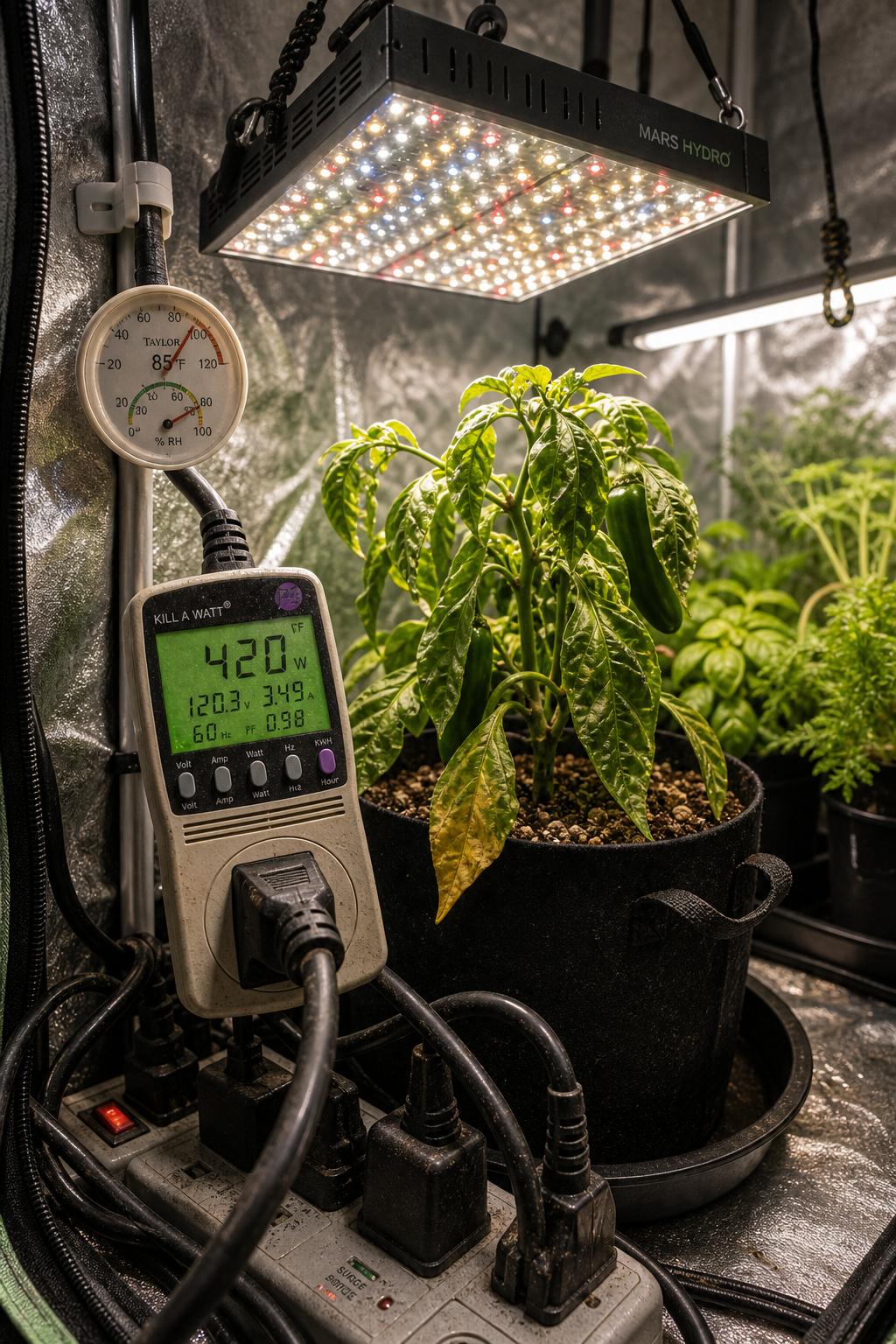
If your electricity bill seems high compared to the size of your indoor garden, your grow tent is likely using more power than it needs to. In most cases the issue is not one large mistake. It is a collection of small inefficiencies inside the grow tent that stack together and quietly drain energy every hour the system runs.
I have audited many grow tents that looked perfectly stable on the surface. Temperatures were fine. Humidity was controlled. Plants looked healthy. But once we examined how each piece of equipment interacted inside the enclosed grow tent environment, we found wasted electricity at nearly every stage of the setup.
The Hidden Power Drains Inside an Otherwise Stable Grow Tent
A grow tent is a sealed micro environment. Every watt you use ends up as heat inside that fabric box. That heat must then be removed or balanced. This is where hidden power drains begin.
Lighting That Overcompensates
One of the biggest hidden drains in a grow tent is using more light intensity than the tent can efficiently handle. When a light runs at full output in a small grow tent, the excess heat forces your exhaust fan to ramp up. That increased air extraction pulls conditioned air out of the tent, which may trigger heaters or dehumidifiers to activate more often.
You are not just paying for the light. You are paying for the fan and environmental equipment reacting to that light.
Inside a grow tent, light output and ventilation are directly linked. If dimming your light slightly stabilizes temperature, your exhaust fan will run less aggressively. That alone can trim meaningful energy use over a full light cycle.
Exhaust Systems Working Against Passive Intake
Many grow tents rely on passive intake flaps. If your exhaust fan is oversized for the tent and runs at full speed, it creates strong negative pressure. That increases resistance and forces the fan motor to work harder. Over time this adds unnecessary consumption and wear.
An exhaust fan should only move enough air to maintain temperature stability inside the grow tent. If tent walls bow inward significantly, that is a sign the system is pulling harder than needed.
Dehumidifier and Humidifier Cycling Conflicts
This is common in sealed grow tents. A powerful light raises leaf transpiration. Humidity spikes. A dehumidifier activates. That dehumidifier produces heat. The added heat triggers more exhaust or cooling. Now the environment fluctuates and equipment cycles repeatedly.
Each cycle draws startup current, which uses more power than steady operation. Inside a grow tent, tight control ranges that are too strict can actually increase total consumption.
The Equipment Stacking Mistake That Quietly Increases Energy Use
In many grow tents, equipment is added in layers without evaluating system balance. A stronger light is installed. Then a larger fan. Then a heater. Then a dehumidifier. Each addition responds to a symptom caused by the previous upgrade.
This stacking effect creates internal competition inside the grow tent.
For example, a heater might run during lights off to maintain temperature. But if the grow tent is not well sealed around duct ports or electrical openings, warm air escapes. The heater runs longer. Meanwhile the exhaust fan might still cycle periodically, removing the heated air that the heater just produced.
Another common stacking issue is running multiple small circulation fans when one well positioned fan at the correct height would move air effectively. Every extra device adds direct draw and adds heat that must be managed within the tent.
The key principle inside a grow tent is that every device affects every other device. Power waste rarely comes from a single component. It comes from poor coordination.
A Simple Grow Tent Power Audit You Can Do in One Evening
You do not need specialized tools beyond an energy meter plug and a notebook. Perform this audit during both lights on and lights off periods inside your grow tent.
Step 1 Measure Individual Draw
Plug each major device in your grow tent into an energy meter one at a time. Record real watt draw for the light, exhaust fan, circulation fans, heater, dehumidifier, and any controllers.
Do not assume manufacturer ratings reflect actual draw at your controller settings.
Step 2 Observe Runtime Patterns
For two hours, watch how often each device cycles inside the grow tent. Note what triggers activation. For example, does the dehumidifier turn on shortly after the light increases intensity. Does the heater activate immediately after lights off.
This shows causal relationships between devices.
Step 3 Check Negative Pressure and Air Leaks
Zip the grow tent fully and observe wall tension. Slight inward pull is correct. Extreme bowing indicates excessive exhaust speed. Also check duct connections and cable ports for warm air leakage during heater operation.
Leaking air means your environmental equipment is conditioning air that never stays inside the tent.
Step 4 Review Controller Set Points
Look at the differential settings on your fan or humidity controllers. If your exhaust activates within a one degree or one percent humidity swing, you are encouraging constant cycling.
In a grow tent environment, slightly wider tolerances often stabilize equipment behavior and reduce repeated start cycles.
Step 5 Evaluate Light Position and Dimming
Lowering light intensity by a small percentage can significantly reduce heat load inside a grow tent. After dimming by ten percent, monitor whether exhaust runtime decreases. If plant response inside the tent remains strong and environmental control improves, you have found an efficiency gain.
Small System Adjustments That Cut Electricity Without Hurting Performance
Once you complete the audit, apply targeted adjustments rather than replacing equipment.
Match Fan Speed to Tent Volume
Instead of running an exhaust fan at maximum, use a speed controller so the fan maintains steady moderate extraction inside the grow tent. Continuous moderate airflow is more efficient than high speed cycling.
Coordinate Light and Environmental Controllers
If your lighting controller allows sunrise and sunset simulation, use gradual ramp up. Sudden full intensity spikes heat rapidly inside a grow tent and force fans and dehumidifiers into aggressive response.
Gradual increases create smoother environmental curves and reduced peak loads.
Seal and Insulate Strategically
Insulate ducting that passes through cooler rooms before entering the grow tent. Seal unused ports with tight fittings. In a grow tent, small air leaks translate directly into longer runtime for heaters or dehumidifiers.
Reduce Redundant Devices
If two circulation fans overlap airflow patterns, remove one and reassess leaf movement. Inside a grow tent, airflow should create gentle consistent movement across the canopy. More fans do not automatically equal better performance. They often just add heat load.
Troubleshooting Common High Power Scenarios in a Grow Tent
Why does my grow tent spike in power right after lights turn off
When lights switch off, temperatures drop quickly inside the grow tent. This often triggers heaters and may increase humidity, activating a dehumidifier. Both devices can draw significant power simultaneously. A gradual light ramp down and slightly higher night temperature target can smooth that transition.
Why is my exhaust fan running almost constantly
This usually means one of three things inside the grow tent. The light is generating more heat than the tent can passively buffer. The fan speed is set too high, creating unnecessary negative pressure. Or controller tolerances are too tight, forcing frequent activation. Lower light intensity slightly and widen activation ranges before upgrading equipment.
Does a bigger grow tent use electricity more efficiently
A larger grow tent can buffer heat more gradually, which may reduce rapid equipment cycling. However, the total watt draw is determined by the devices you install inside that tent. Efficiency comes from balanced system design, not just tent size.
When you treat your grow tent as a coordinated system instead of a collection of devices, electricity use becomes predictable and manageable. Most high bills come from overlooked interactions inside that enclosed space. A focused audit and a few precise adjustments can trim energy use significantly while keeping your grow tent environment stable and productive.


